
Four college students slaughtered: When does the end justify the means?
What is the greater good, exactly? And just how private is your DNA?
DNA has been vital to me, both personally and professionally. DNA has also become an invaluable tool for law enforcement—one they’re sometimes willing to bend the rules to use.
DNA for health: discovering I’m abnormal
I had my DNA tested decades ago, after a family member was diagnosed with extra DNA known as a small supernumerary marker chromosome (sSMC). About 70% of sSMC carriers are developmentally normal, while the remaining 30% have health problems ranging from mild to severe. Genealogists ultimately decided we were in the lucky 70%. Still, it’s strange to see your DNA report labelling you an “abnormal female.”

DNA for family trees: Martha’s past is no longer a secret
DNA can also help you build your family tree on services like Ancestry. DNA results from me and my siblings helped me identify my great-grandmother’s family.
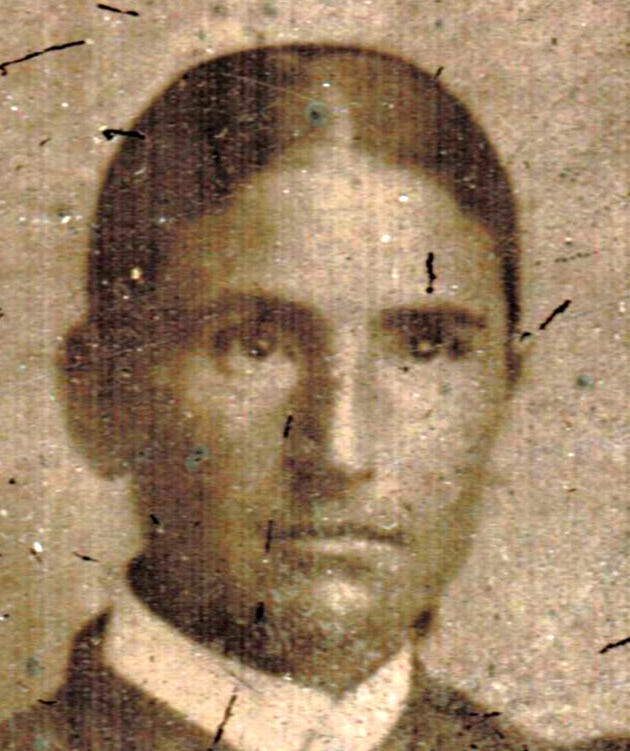
To maximize the change of finding relatives, I submitted my DNA to Ancestry, MyHeritage, and 23andMe. None of those companies told me about my sSMC. Why? Direct-to-consumer DNA tests aren’t held to the same medical standards as clinical testing, meaning they don’t have to report even possibly medically significant findings.
DNA for crime solving
As we know from any cop show, DNA can solve crimes. The DNA in the CODIS database, the Combined DNA Index System, comes primarily from convicted offenders. CODIS doesn’t have full DNA profiles, just STRs, which are repeating sequences of “non-coding” DNA. (Non-coding means they don’t reveal traits or diseases.) STRs are very accurate for making direct, one-to-one matches to identify individuals, but cannot identify family relationships.
DNA for investigative genetic genealogy
But what if you hit a dead-end in CODIS? Investigators might extract a fresh DNA sample from the original evidence, and then upload it to a public genealogy database that allows law enforcement access, like GedMatch or FamilyTreeDNA.
The database identifies distant relatives who share matching blocks of DNA. By building a family tree backward, a genetic genealogist can identify the common ancestor shared by the person who left DNA at the crime scene and the distant relative in the database. Using public records and other family trees, they figure out who it might be. This is how the Golden State Killer was identified.
Once the tree points to a suspect, investigators must discreetly obtain a fresh DNA sample from that person (such as from a discarded coffee cup). They run a STR test on that sample and compare it directly to the original crime scene evidence. An arrest is only made if there is an exact STR match.
However, many popular genealogy sites—like Ancestry, 23andMe, and MyHeritage—don’t allow law enforcement searches. (I had to stop watching the reboot of Presumed Innocent after the fictional detective claimed the suspect was foolish to upload his DNA to Ancestry because then law enforcement could access it. Nope!)
FamilyTreeDNA does allow law enforcement access. And GEDMatch only allows law enforcement to use GEDMatch PRO, which costs $1000 a profile, and only searches profiles that have opted in to law enforcement use. (In January 2021, GEDMatch changed its terms of service to opt everyone in for searches involving unidentified human remains.)
Bryan Kohberger: desperate times call for desperate measures?
In the past, genealogists working with police have provided AncestryDNA testing kits to people they think are relatives of suspects—known as “target testing”—or asked customers for access to preexisting accounts so they could see the off-limits data. And there was a secret backdoor at GEDMatch that allowed investigators to break the terms of service and access the full database, not just those who had opted in.
When Bryan Kohberger murdered four college students in Idaho, he left behind a knife sheath with male DNA on the snap. But the databases the FBI were allowed to access (GEDMatch PRO and FamilyTreeDNA) only yielded low percentage matches.
So, posing as ordinary users, the FBI uploaded the profile to two places they weren’t supposed to: the full GedMatch (which includes those who have not opted into law enforcement use) and MyHeritage. That quickly led them to Kohberger.
But there has been fallout. Now MyHeritage no longer allows users to upload profiles from other services. And Ancestry has revised its terms to make it clear that its services are off-limits “for law enforcement purposes” or “judicial proceedings” without a legal order, which is very difficult to get.
A potentially bigger consequence is that now investigators who were building family trees using Ancestry’s collection of information (family trees as well as census, marriage, and death records) are no longer supposed to be using even those parts of Ancestry. It had been a one-stop source that helped solve hundreds of cases.
Crossing paths with experts
Genetic genealogy is key to my latest book, In the Blood.

Because of my fascination with genetic genealogy, over the years I’ve crossed paths with many of the well-known experts in the field.
One is CeCe Moore, the genetic genealogy expert for Finding Your Roots and the head of Parabon NanoLabs’s genetic genealogical unit. She got her start using genetic genealogy to help adoptees find their biological parents, then used the same methods to put names to unidentified dead bodies, and then eventually to solve crimes.
In 2019, I met CeCe at a conference held by the Pacific Northwest Division of the International Association for Identification. I was the only civilian in the room, and also the only person who asked questions. Cece has spoken favorably about how DNA was used to identify Kohberger.
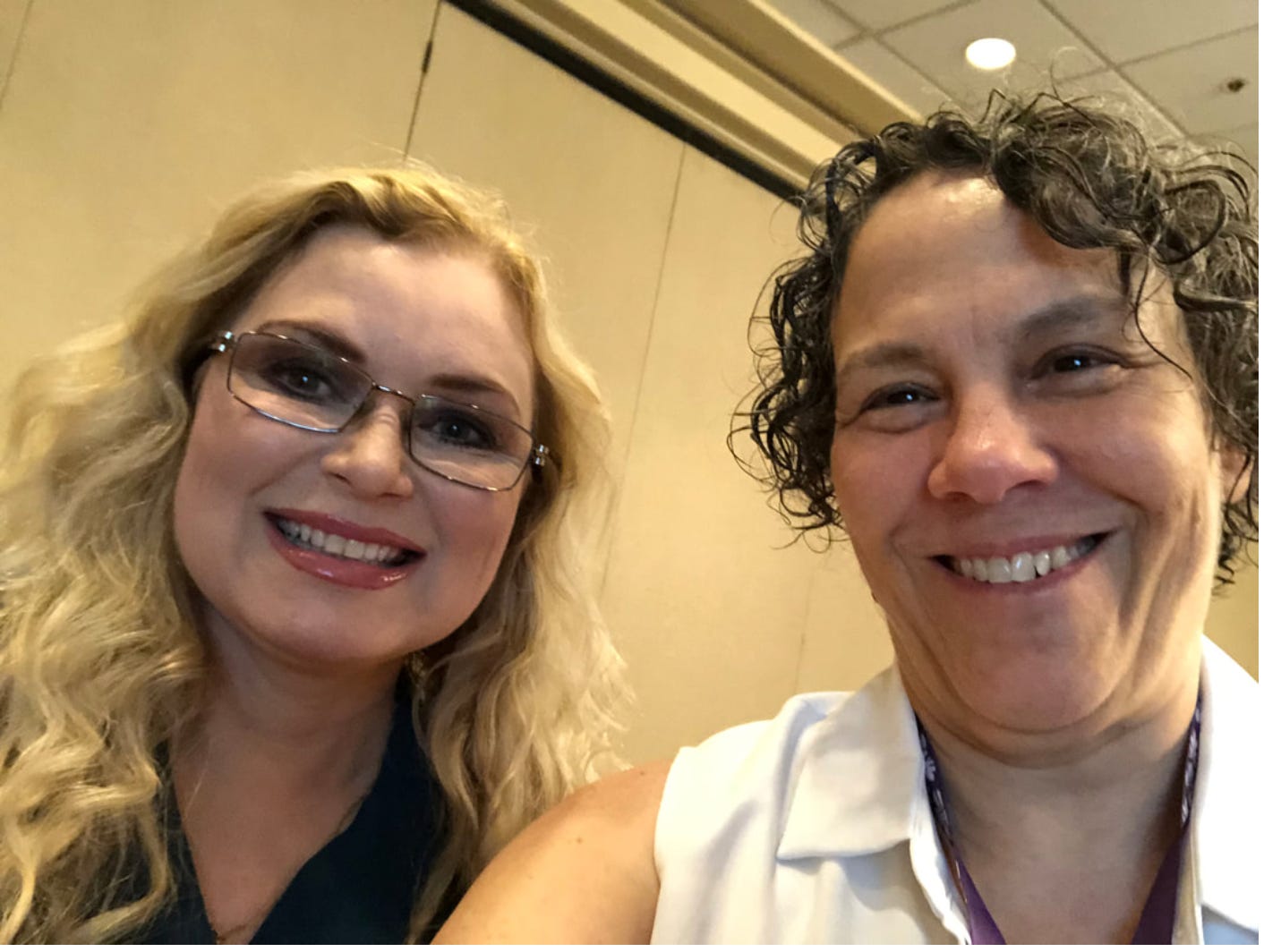
During the pandemic, I volunteered with the DNA Doe Project, which uses DNA to put names to unidentified bodies. Margaret Press, co-founder of the DNA Doe Project, issued a public apology for taking advantage of the security flaw in the GEDmatch database to view DNA profiles of users who had not opted into forensic testing.
And when I was writing In the Blood, I reached out to Leah Larkin, PhD, who created the blog The DNA Geek. She helped me make Tessa’s search for her birth parents more difficult. Leah was also part of Kohberger’s defense team, which argued that access to the sites without a warrant violated his constitutional rights. The judge in the case rejected the argument. Leah has been passionate about the need for law enforcement to follow the rules, and argues that not doing so is a slippery slope.
I can honestly see both sides. Catching a murderer is a powerful argument for stretching the rules. But our DNA holds intensely private information, and we should get to decide who we share it with. And should law enforcement be allowed to choose which rules to follow and which to discard?
Where would you draw the line?
Such a fascinating blog. Your meticulous research shines through in your book. I loved In the Blood!